

Get a free estimate for yourCOURT
Pickleball Court — Acrylic Coating
Turnkey InstallationTurnkey court construction, transparent pricing, and a free written quotation. Pan-India service.
Configure your court
Prices are indicative per sqft, ex-GST. Use the cost calculator below for a full project estimate including base, kerbs, line marking, and add-ons.
Calculate Your Court Cost
Pre-configured for this surface. Enter dimensions for an instant estimate — no signup required.
Which sport will this court be used for?
How many courts and what configuration?
What surface type do you want?
What is the base / sub-structure situation?
Any add-ons? (Optional — all can be added later)
Indicative range only. Actual pricing depends on site conditions, geography, and final material availability. Use the WhatsApp button to send your configuration directly to our team for a detailed estimate within 5 minutes.
Is this surface right for you?
Best for
- Competition
- Clubs
- Academies
- Outdoor
- All-weather
Our recommendations draw on each sport's court dimensions and line-marking rules and on the team's 16+ years of hands-on experience. No surface is one-size-fits-all — we'd rather lose a sale than build the wrong court.
Pickleball Courts: Premium Acrylic Flooring by ChampCourts
Pickleball has exploded from a niche recreational activity into one of the fastest-growing racquet sports across India and the world. Corporate wellness programmes, residential townships, school physical education departments, and dedicated sports clubs are all racing to build pickleball courts that meet international standards while standing up to the demands of the Indian climate. ChampCourts is among the leading pickleball court builders in India, delivering turnkey pickleball court construction — from civil works through acrylic surface application, precise line marking, and net-post installation — under a single contract with transparent pricing and guaranteed timelines.
Whether you are building a single outdoor pickleball court for a housing society, a multi-court facility for a professional training academy, or converting an underused tennis court into a cluster of pickleball courts, ChampCourts brings the engineering discipline, high-quality materials, and installation expertise to get the job done right the first time. Our acrylic pickleball court flooring system is purpose-built for Indian conditions: UV-stable under harsh summer sun, moisture-resistant through the monsoon, and textured for consistent traction across every season.
Pickleball Court Construction: The ChampCourts Process
Our pickleball court construction process follows seven carefully sequenced stages, each with defined quality checkpoints. This systematic approach — developed over hundreds of sports court projects across India — eliminates the costly surprises and rework that plague projects handled by general civil contractors unfamiliar with sports flooring specifications.
Stage 1: Site Assessment and Design
Every project begins with a thorough site survey. Our engineering team evaluates soil conditions, drainage patterns, existing structures, orientation relative to the sun (critical for outdoor pickleball courts — the long axis should run north-south to minimise sun glare during play), and vehicle access for material delivery. We then produce a detailed layout drawing showing court placement, run-off zones, spectator areas, and any fencing or lighting positions. For multi-court installations, we optimise the layout to maximise the number of courts while maintaining adequate spacing between adjacent playing surfaces.
Stage 2: Earthwork and Sub-Base
The site is excavated to 250 to 300 millimetres below the finished playing surface level. The exposed sub-grade is compacted to at least 95 percent Modified Proctor Density, followed by a compacted granular sub-base layer (WBM or GSB). Proper compaction is essential for long-lasting durability — an inadequately compacted base will develop settlement cracks that telegraph through to the acrylic surface within one to two monsoon cycles, ruining the playing experience and requiring expensive repairs.
Stage 3: PCC Base Slab
A Plain Cement Concrete slab of M25 grade, 125 to 150 millimetres thick, is poured with a surface tolerance of plus or minus 3 millimetres over a 3-metre straightedge. Expansion joints are cut at intervals to accommodate thermal expansion, and the slab is cured for a minimum of 14 days. The quality of this concrete base directly determines the longevity of the entire court — it is the single most important structural element and should never be rushed or under-specified. Many budget contractors pour a thinner, lower-grade slab to save costs; this is a false economy that leads to cracking and premature failure.
Stage 4: Surface Preparation and Priming
Once cured, the concrete surface is mechanically ground to remove laitance, pressure-washed, and dried thoroughly. An acrylic bonding primer is applied to create a chemical adhesion layer between the concrete and the coating system. Cracks and joints are filled with flexible acrylic filler. This preparation stage is what separates professional pickleball court construction from a simple paint job over concrete.
Stage 5: Acrylic Coating System
The acrylic coating is applied in six to eight coats over three to five days. The system comprises a resurfacer layer (to correct minor surface imperfections), colour coats using UV-stable acrylic resins, and a final textured finish coat that controls the speed and grip of the playing surface. ChampCourts uses globally sourced, high-quality surface material formulated specifically for tropical climates — ensuring colour retention, crack resistance, and consistent ball response for years of intense play. The cushion variant of our acrylic system adds a rubber-granule interlayer beneath the colour coats, providing enhanced shock absorption that reduces joint stress during long playing sessions.
For the full range of builds, see our acrylic sports flooring from 2 to 12 layers, with cushion coats from 6 layers upward.
Stage 6: Line Marking
Pickleball court lines are marked to USA Pickleball and IFP specifications using precision laser alignment. Marking includes the baseline, sidelines, non-volley zone (the critical 7-foot kitchen line), centreline, and service areas. All lines are 2 inches wide, painted in a contrasting colour that is clearly visible against the court surface. For facilities that also host tennis, badminton, or other sports on the same surface, we apply multi-sport markings in distinct colours following the hierarchy and spacing protocols mandated by each federation.
Stage 7: Inspection, Net Post Installation, and Handover
A final quality inspection verifies surface flatness, colour uniformity, line accuracy, and drainage function. Portable or permanent net posts are installed at the regulation centre-court position. The client receives a handover report, a maintenance guide, and warranty documentation covering five years on the acrylic surface and ten years on the structural base.
Pickleball Court Builders: What Sets ChampCourts Apart
India now has dozens of contractors offering to build pickleball courts, but the quality gap between specialist pickleball court builders and general contractors is vast. Here is what distinguishes ChampCourts from the rest:
- Sports-specific engineering: We build only sports courts. Every design decision — concrete mix, joint placement, surface texture, drainage gradient — is made with sport performance in mind, not just civil construction convenience.
- Climate-tested materials: Our acrylic resins and pigments are laboratory-tested for 5,000-plus hours of UV exposure and 200-plus freeze-thaw cycles. They do not fade, chalk, or peel under Indian conditions the way generic industrial paints do.
- Precision line marking: We use laser-guided marking rigs, not hand-held tape measures. Line accuracy matters in pickleball — a kitchen line that is off by even one inch changes the dynamics of the non-volley zone.
- Single-source accountability: ChampCourts manages the entire scope — civil, surface, marking, fencing, lighting, equipment. No finger-pointing between sub-contractors when something needs attention.
- After-sale support: Annual maintenance contracts, professional resurfacing, and line re-marking services ensure your courts stay in world-class condition year after year.
Court Size and Pickleball Court Dimensions
Understanding the correct pickleball court dimensions is essential for planning your project. The standard court size for singles and doubles play is 20 feet wide by 44 feet long (approximately 6.1 metres by 13.4 metres), yielding a playing area of 880 square feet. However, the total footprint must be significantly larger to provide safe run-off zones around the court perimeter.
| Configuration | Playing Area | With Run-Off (recommended) | Total Area (sqft) | Approx. Cost (acrylic) |
|---|---|---|---|---|
| Single court (minimum) | 20ft x 44ft | 30ft x 60ft | 1,800 sqft | Rs 2.79 lakh |
| Two courts (side-by-side) | 2 x (20ft x 44ft) | 60ft x 60ft | 3,600 sqft | Rs 5.58 lakh |
| Four courts (2 x 2 grid) | 4 x (20ft x 44ft) | 60ft x 120ft | 7,200 sqft | Rs 11.16 lakh |
| Tennis court conversion (1 tennis = 4 pickleball) | 4 x (20ft x 44ft) | Existing 60ft x 120ft footprint | 7,200 sqft | Rs 4.68 lakh (coating only) |
Costs are calculated at Rs 155 per sqft (Rs 90 PCC base + Rs 65 acrylic coating). For the tennis court conversion scenario, the existing concrete base is reused, so only the coating cost of Rs 65 per sqft applies — a highly cost-effective way to add four premium pickleball courts to a facility that already has an underutilised tennis court. The pickleball court dimensions fit neatly within a standard tennis court footprint, with the net positioned at 34 inches at the centre (2 inches lower than tennis).
Acrylic: The Ideal Pickleball Court Flooring
Acrylic sports flooring has become the surface of choice for competitive and recreational pickleball courts worldwide, including at USA Pickleball-sanctioned tournaments. The reasons are straightforward: consistent ball bounce, reliable foot traction, long-lasting colour, and exceptional durability under outdoor conditions. For building a pickleball court that will serve its community for a decade or more, acrylic is the proven flooring solution.
Standard Acrylic vs Cushioned Acrylic
ChampCourts offers two acrylic variants for pickleball court flooring:
- Standard acrylic (Rs 155/sqft all-in): The workhorse specification. Six to eight coats directly over the PCC base. Firm, fast playing surface with excellent durability. Ideal for outdoor pickleball courts in schools, parks, and residential complexes where cost efficiency is a priority.
- Cushioned acrylic (Rs 185–210/sqft all-in): Adds a 3 to 5 millimetre rubber-granule cushion layer beneath the acrylic colour coats. Provides noticeably more shock absorption, reducing fatigue and joint stress during extended play. Preferred by competitive players, senior communities, and facilities targeting a premium playing experience. The cushion layer also slightly slows the ball, favouring longer rallies and more strategic play. Explore our dedicated cushioned acrylic multi-sport court product for details on this specification.
Both variants offer excellent durability, UV resistance, and low maintenance. The choice between them comes down to budget and the desired playing experience for your community.
Pickleball Court Construction in India: Where We Build
ChampCourts executes pickleball court construction in India from our operational base in Hyderabad, with project teams active in Telangana, Andhra Pradesh, Karnataka, Tamil Nadu, Kerala, Maharashtra, Gujarat, Rajasthan, Delhi NCR, Haryana, Punjab, Uttar Pradesh, Madhya Pradesh, West Bengal, and the northeastern states. Our centralised material procurement and standardised construction methodology ensure that a pickle ball court built in Kochi receives exactly the same specification, quality control, and warranty as one built in Chandigarh or Guwahati.
Pickleball court construction demand in India has surged since 2024, driven by the sport's inclusion in national-level competitive calendars, the establishment of the Pickleball Federation of India, and growing media coverage of international tournaments. Schools are adding pickleball to their physical education programmes, corporate campuses are installing courts as wellness amenities, and residential townships are discovering that a cluster of pickleball courts delivers more community engagement per square foot than almost any other sports facility investment.
Tennis Court to Pickleball Conversion
One of the most popular and cost-effective ways to add pickleball courts to an existing sports facility is to convert a tennis court. A standard tennis court footprint (78 feet by 36 feet, or 60 feet by 120 feet with doubles alleys and run-offs) can accommodate up to four regulation pickleball courts with proper spacing. If the existing tennis court surface is in reasonable condition, ChampCourts can apply fresh acrylic flooring and new pickleball line markings over the existing base — typically at Rs 65 per sqft for coating only, without the Rs 90 PCC base cost. Many facilities choose to retain tennis lines alongside the pickleball markings, creating a multi-sport surface that serves both communities. This dual-marking approach is the most cost-effective way to introduce pickleball without sacrificing your existing tennis infrastructure.
Conversion projects typically take 7 to 10 working days from surface preparation through to handover, including line marking for both sports. For facilities that want to compare acrylic with tile-based alternatives for this conversion, see our PP tiles pickleball court option or read our detailed PP tiles vs acrylic comparison guide.
Outdoor Pickleball: Climate Considerations for Indian Courts
The vast majority of pickleball courts in India are built outdoors, and outdoor pickleball presents specific design challenges that must be addressed during construction, not after problems emerge. ChampCourts designs every outdoor pickleball court with these climate factors built in:
- Monsoon drainage: A minimum 1 percent slope across the court surface, draining to perimeter channels, ensures the court is playable within minutes of rain stopping. Standing water is the number one cause of premature surface degradation on outdoor courts.
- UV resistance: Our acrylic pigments are rated for 5,000-plus hours of accelerated UV testing. Colours remain vibrant for 6 to 8 years before any noticeable fading — critical for outdoor pickleball courts exposed to 300-plus days of direct sunlight annually in most Indian locations.
- Thermal expansion: Expansion joints in the PCC base, combined with flexible joint fillers, prevent heat-induced cracking. Surface temperatures on outdoor courts can exceed 65 degrees Celsius in peak summer; our acrylic system is formulated to remain flexible and crack-resistant across this range.
- Wind considerations: For elevated or coastal sites, we recommend perimeter windscreens to prevent wind-affected play. Pickleball uses a lightweight wiffle-style ball that is more sensitive to wind than tennis or badminton shuttles.
- Orientation: Courts are aligned north-south to minimise sun glare during morning and evening play — the peak usage hours for most facilities. This is a zero-cost design decision that dramatically improves the playing experience but is frequently overlooked by non-specialist contractors.
Synthetic Pickleball Court vs Natural Surfaces
A synthetic pickleball court — whether acrylic, PU, or PP tiles — vastly outperforms natural surfaces (clay, grass, bare concrete) for competitive and recreational pickleball. A premium pickleball court with a proper synthetic surface offers consistent ball bounce, controlled speed, reliable traction, and long-lasting performance that natural surfaces simply cannot match. While clay courts have a loyal following in tennis, the pickleball community worldwide has standardised on hard-court surfaces, with acrylic being the predominant surface material at sanctioned tournaments from the local club level through to international championships.
Compliance with International Standards
All ChampCourts pickleball court installations comply with the dimensional and surface requirements of USA Pickleball (USAPA) and the International Federation of Pickleball (IFP). Our courts meet international standards for playing area dimensions (20ft x 44ft), non-volley zone depth (7 feet from the net on each side), net height (36 inches at the sidelines, 34 inches at centre), and line widths (2 inches). The acrylic playing surface is tested for ball rebound consistency, surface friction coefficient, and colour contrast in accordance with recognised world-class sports facility benchmarks. Whether your facility hosts casual community play or sanctioned tournament competition, ChampCourts builds courts that meet every regulatory requirement without compromise.
Maintenance for Long-Lasting Pickleball Court Performance
Acrylic pickleball courts are inherently low-maintenance, but following a simple care schedule will maximise their lifespan and keep the playing surface in world-class condition:
- Weekly: Sweep or leaf-blow the surface to remove debris. For indoor courts, damp-mop with clean water only.
- Monthly: Inspect drainage channels and clear any accumulated sediment (outdoor courts). Check the net and post system for wear.
- Quarterly: Walk the surface and inspect for any cracks, blistering, or line wear. Early detection of minor issues prevents costly major repairs.
- Annually: Professional pressure wash at 1,500 to 2,000 PSI to restore surface texture and remove embedded grime. Reapply anti-algae treatment for courts in high-humidity or shaded locations.
- Every 8–10 years: Professional resurfacing with two to three fresh acrylic coats over the existing surface. This restores the court to as-new condition at approximately 40 percent of the original coating cost.
With this basic maintenance routine, your acrylic pickleball court flooring will deliver consistent, long-lasting performance for a decade or more before a resurface cycle is needed.
Frequently Asked Questions About Pickleball Court Construction
How big is a pickleball court?
A regulation pickleball court measures 20 feet wide by 44 feet long (880 sqft of playing area). However, the recommended total footprint including run-off zones is 30 feet by 60 feet (1,800 sqft). This additional space around the court perimeter is essential for safe play, especially during competitive matches where players frequently move beyond the baseline. ChampCourts always designs layouts with adequate run-off included in the court size calculation.
Can synthetic flooring be used for both indoor and outdoor pickleball courts?
Yes. Our acrylic flooring system is engineered for both indoor and outdoor installation. Outdoor pickleball court surfaces receive additional UV stabilisers and are applied over a sloped PCC base for drainage. Indoor courts use the same acrylic system but over a flat base without drainage slope. The playing experience is essentially identical — consistent ball bounce, reliable traction, and long-lasting colour — regardless of whether the court is covered or exposed. The durability and versatility of acrylic make it the ideal flooring solution for any pickleball facility.
Can pickleball court dimensions be customised?
The playing area dimensions (20ft x 44ft) are fixed by the rules of the sport and should not be altered if you intend to host any level of organised play. However, the run-off zones, overall footprint, number of courts, orientation, fencing configuration, and ancillary areas (spectator seating, equipment storage, warm-up zones) are fully customisable. ChampCourts works with each client to design the optimal layout for their available space and intended use, ensuring every square foot of the site is used effectively while respecting the non-negotiable on-court dimensions.
Do ChampCourts pickleball courts comply with international standards?
Absolutely. Every ChampCourts pickleball court is built to the exact specifications mandated by USA Pickleball and the International Federation of Pickleball: 20ft x 44ft playing area, 7-foot non-volley zones, 34-inch net height at centre, and 2-inch line widths. Our acrylic surface material meets international standards for ball rebound, friction, and colour contrast. Whether you are building for casual community play or sanctioned tournament hosting, our courts are certified-ready from day one.
How much does pickleball court construction cost in India?
A single regulation pickleball court with full run-off (1,800 sqft) costs approximately Rs 2.79 lakh at our standard rate of Rs 155 per sqft (Rs 90 PCC base + Rs 65 acrylic coating). A four-court cluster (7,200 sqft) costs approximately Rs 11.16 lakh. Converting an existing tennis court into four pickleball courts — using only the acrylic coating over the existing base — brings the cost down to approximately Rs 4.68 lakh. Additional costs for fencing, LED lighting, net systems, and site preparation vary by project. Get a free estimate or call +91 92587 75187 for a detailed, no-obligation quotation tailored to your site.
What is the difference between acrylic and PU flooring for pickleball?
Acrylic flooring is harder, faster, more UV-resistant, and more cost-effective. PU (polyurethane) flooring from our PU flooring range is softer, provides more cushion, and is slightly more comfortable for extended play — but costs 20 to 40 percent more and is better suited to indoor installations where UV exposure is not a concern. For most outdoor pickleball courts in India, acrylic is the recommended choice. For premium indoor facilities where player comfort and injury prevention are paramount, PU or cushioned acrylic may be worth the additional investment.
Ready to build your pickleball courts? Get a free estimate today or call +91 92587 75187 to speak with our sports flooring team. ChampCourts delivers professional pickleball court construction in India — from single-court residential installations to multi-court tournament complexes — on time, on spec, and on budget.
Pickleball Court Builders — India-Wide Coverage — Additional Coverage
Our expertise extends to related areas including court in india, pickleball court construction company, commitment to quality, construction service, sports infrastructure, world-class pickleball courts, high-performance, pickleball court builders india, badminton court, best pickleball court, court design, sports facilities, premium materials, weather resistance, high-performance pickleball. Each project is customised to your specific requirements, ensuring the best possible outcome for your facility. Contact ChampCourts for a detailed consultation covering all aspects of your project.
How we build your court — 6 steps
From site survey to handover — transparent at every stage.
Site survey & assessment
Our team visits, measures, and assesses soil + drainage.
Design & material approval
You approve dimensions, colours, line plan, and add-ons.
Base preparation
M20 PCC with GSB 70mm sub-base, or surface preparation if base exists.
Surface installation
Apply surface per spec — acrylic coats, PP tiles snap-fit, vinyl welded seams.
Line marking & equipment
Court-specific lines marked to each sport's court dimensions and line-marking rules; nets, posts or hoops installed.
Handover & warranty
Final inspection, walkthrough, warranty + maintenance docs handed over.
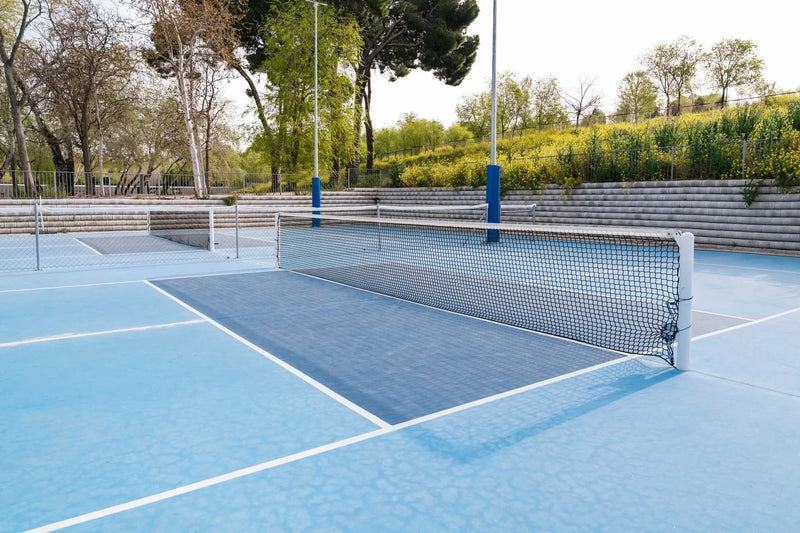
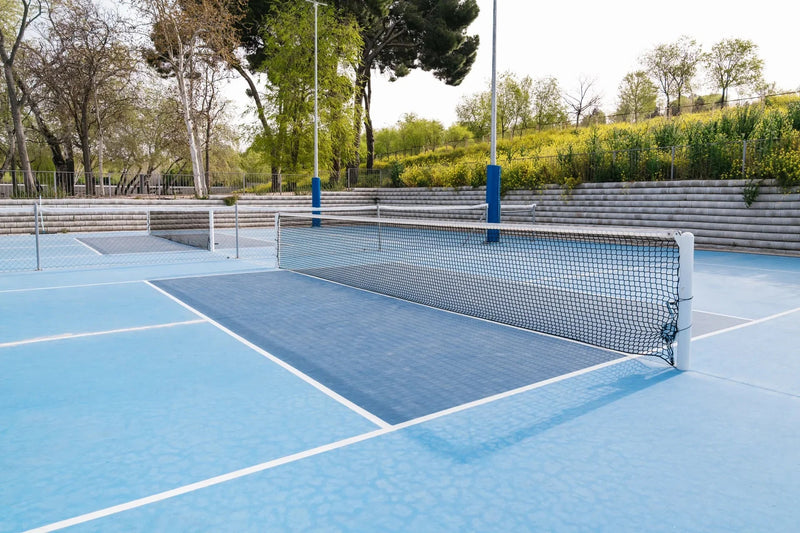
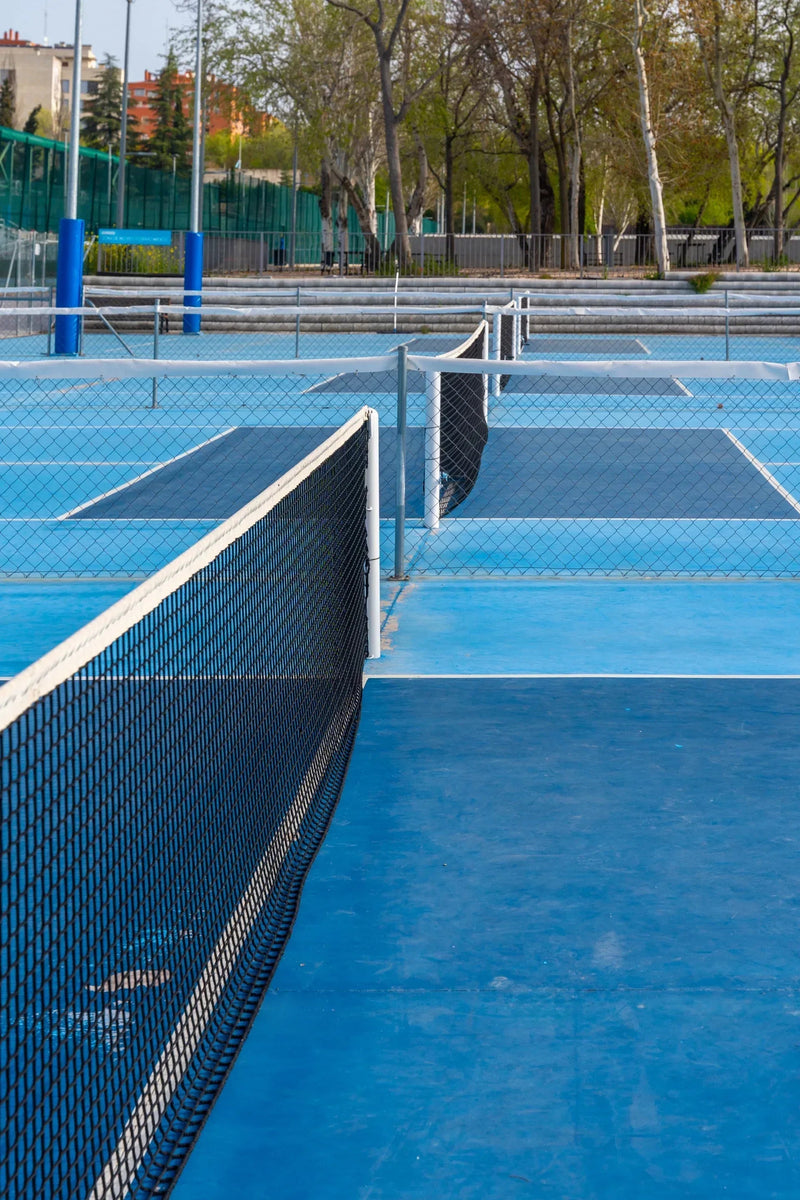
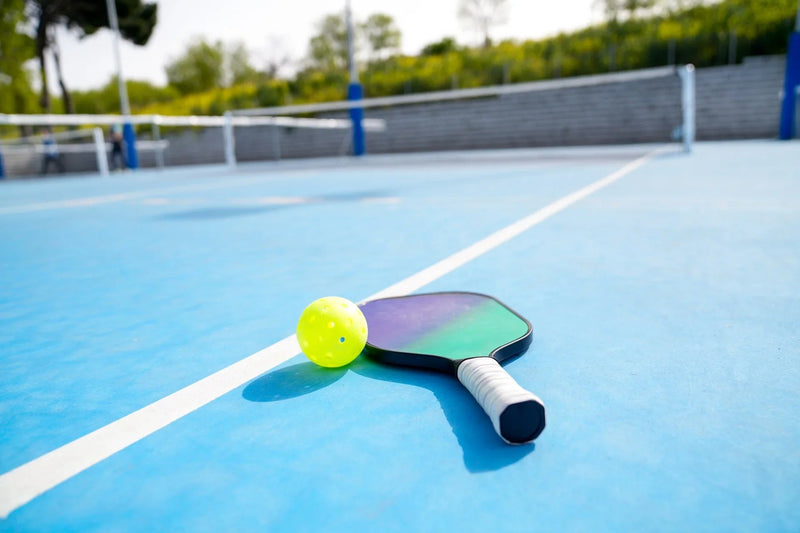
Project gallery
Real installations across India — schools, societies, academies, and corporate facilities.
Why ChampCourts
We're the installer, not just a material supplier.
Turnkey, not just supply
Site prep, base, surface, lines, equipment — we handle everything end-to-end.
Warranty you can rely on
Written limited warranty on surface and workmanship — terms on request. Documented and enforceable.
Pan-India service
Northeast to Bangalore — we travel where you build.
Transparent pricing
Real rates on every product page. No hidden cost, no surprises.
Frequently asked questions
Common questions about our court construction.
Most courts are built in 3-4 weeks from approval. PCC base needs 21 days to cure before surface application. Existing-base projects ship in 1-2 weeks.
Yes. We've installed courts from Arunachal Pradesh to Bangalore. Our team travels to your site for assessment and execution.
Site preparation, base construction (PCC or asphalt), surface installation, line marking, and basic equipment. Optional add-ons (fencing, lighting, nets) are quoted separately.
PP interlocking tiles: 5-year written limited warranty. Acrylic coating, vinyl, and base construction: written limited warranty on materials and workmanship — terms on request.
Yes. We are a registered private limited company (CIN: U43299TS2026PTC213781) with GSTIN 36AANCC6975A1ZG. All invoices are GST-compliant.
Supply + Install: 50% advance on PI signing, 40% on material dispatch, 10% at handover. Supply Only: 50% advance, 50% before dispatch.
Ready to build your court?
Free written quotation. No commitment.
Prefer to call or WhatsApp?