
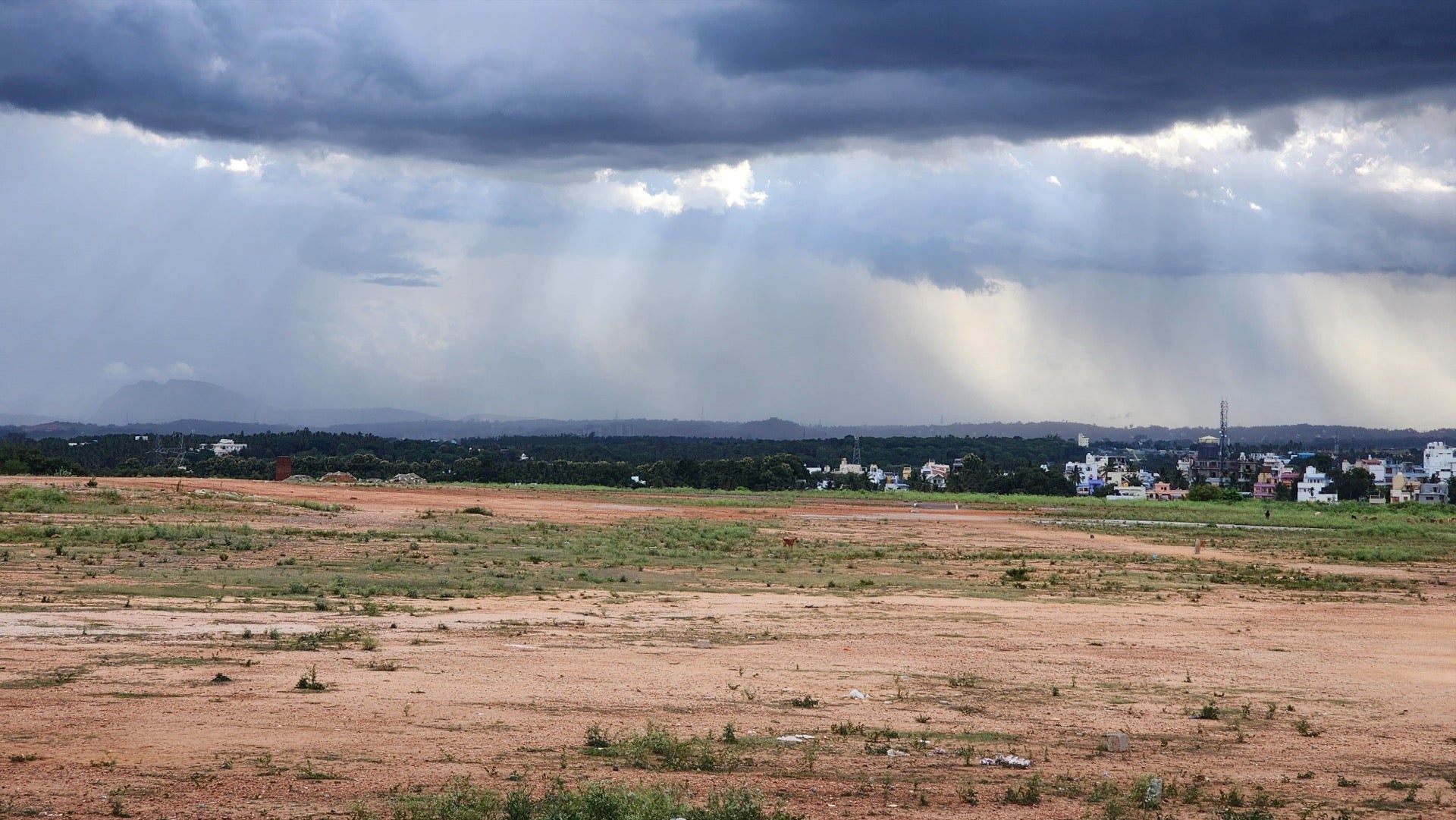
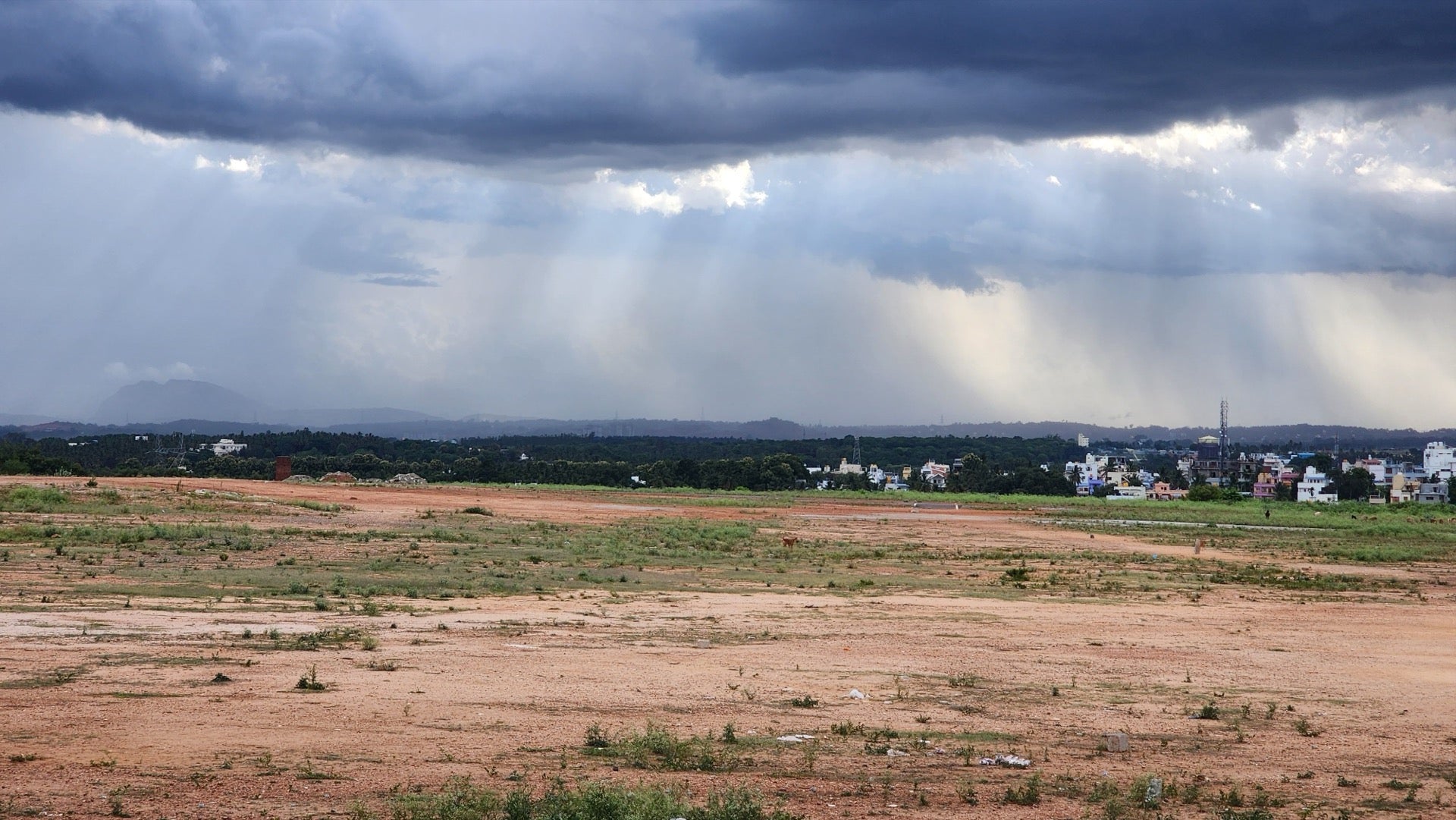
This school had been running on the banks of the Brahmaputra valley for forty years. Management had changed, the curriculum had changed, even the colour on the boundary wall had changed a few times. But one thing had never changed — there was no proper sports court. PE classes happened on packed red earth. Fine when dry. A complete mess when the monsoon hit — and in Assam, the monsoon hits hard for roughly five months of the year.
When the principal finally got a capital improvement fund approved in late spring, she started calling vendors. Most did the math quickly: Tezpur, Assam, pre-monsoon season, smallish project. Two said no outright. A third sent a quote so loaded with logistics surcharges that it ate up more than half the budget. ChampCourts quoted honestly, visited the site, and agreed to proceed. The understanding was clear from day one — this would be built during monsoon season, and the plan had to account for that.
The logistics were tough even without the rain. The nearest major PP tile stockist was 1,400 km away. Getting two full pallets of tiles and kerbing hardware to a school off NH-15 in Assam meant a river crossing, a narrow approach road, and a gate the material truck cleared with eight centimetres to spare. The driver measured this out loud before attempting the turn. The project manager noted that as a sign of a professional who takes his work seriously.
"When they said they'd come all this way and work through the rain, honestly, I did not fully believe them. Then the tiles started arriving."
Principal, A Senior Secondary School, Tezpur, AssamPP interlocking tiles were the only surface that made sense for a monsoon-season build. Acrylic coating needs 72 hours of dry conditions per application cycle — something you simply cannot guarantee in Assam in June. PP tiles are different. They can be installed in ambient humidity, stopped at any point without damage, and resumed within hours of the rain stopping. A half-finished tile court under a tarpaulin loses nothing during a rain delay. In fact, the snap-fit joints tighten with repeated thermal cycling rather than loosening.
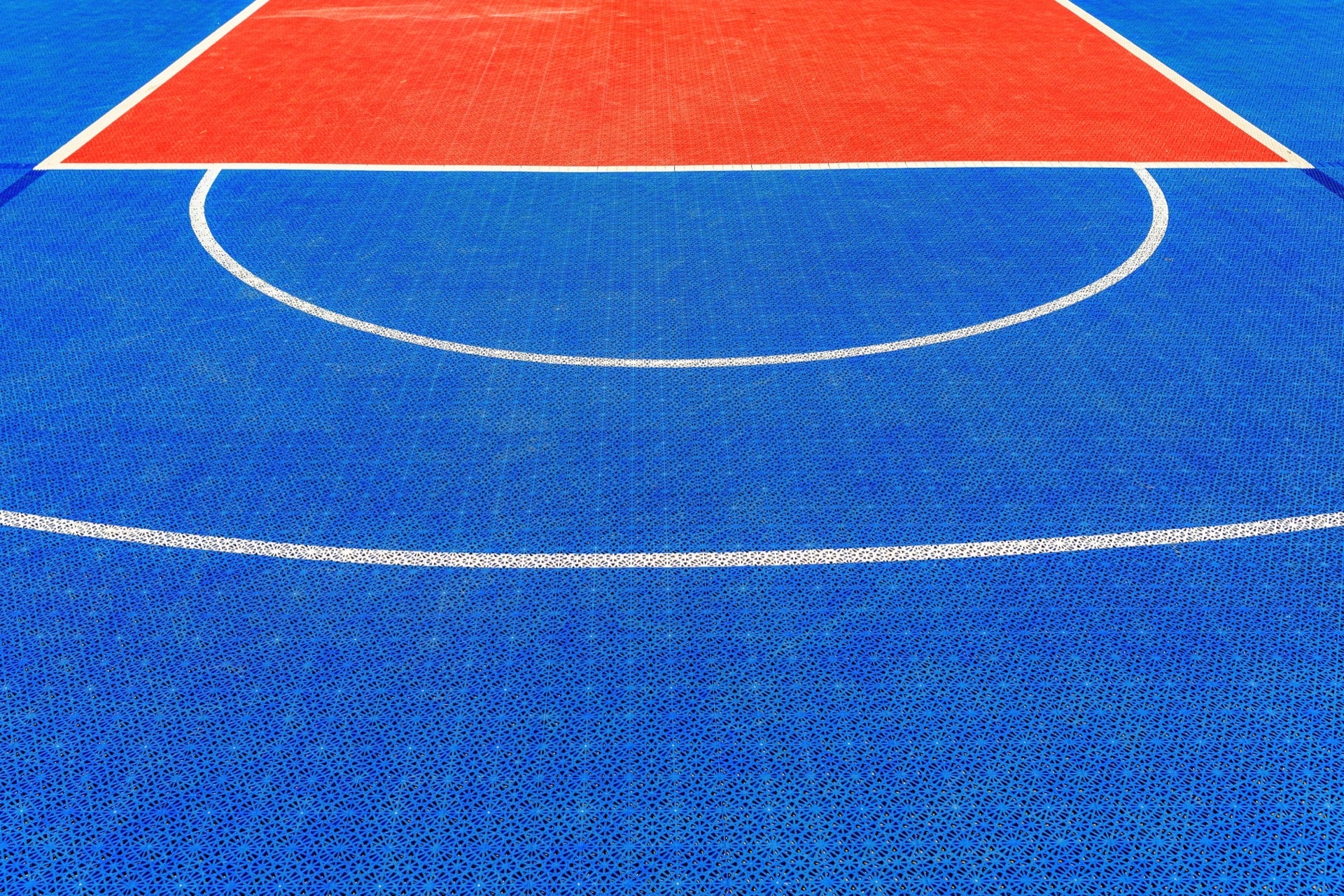
Colour selection came down to availability and function. Green for the basketball court — it reads well against Assam's red soil boundary and photographs cleanly even in flat monsoon light. Blue for the two badminton courts — BWF badminton players respond well to the blue-and-white contrast for court markings, and having two different colours makes it immediately clear which court is which.
The campus had space for a practice-sized basketball court and two compact badminton courts — not full regulation, but perfectly suited to the school's PE curriculum and intramural games. The layout was planned around what the site could actually give us, not what a standard spec sheet assumes.
Drainage was the most important sub-surface decision. The cleared site had a natural 1.8 cm fall across its 60-foot span. That fall was graded and preserved during sub-base compaction — enough to ensure sheet drainage within minutes of rain stopping. Three perimeter channels were installed on the low side to intercept surface water before it could reach the building wall.
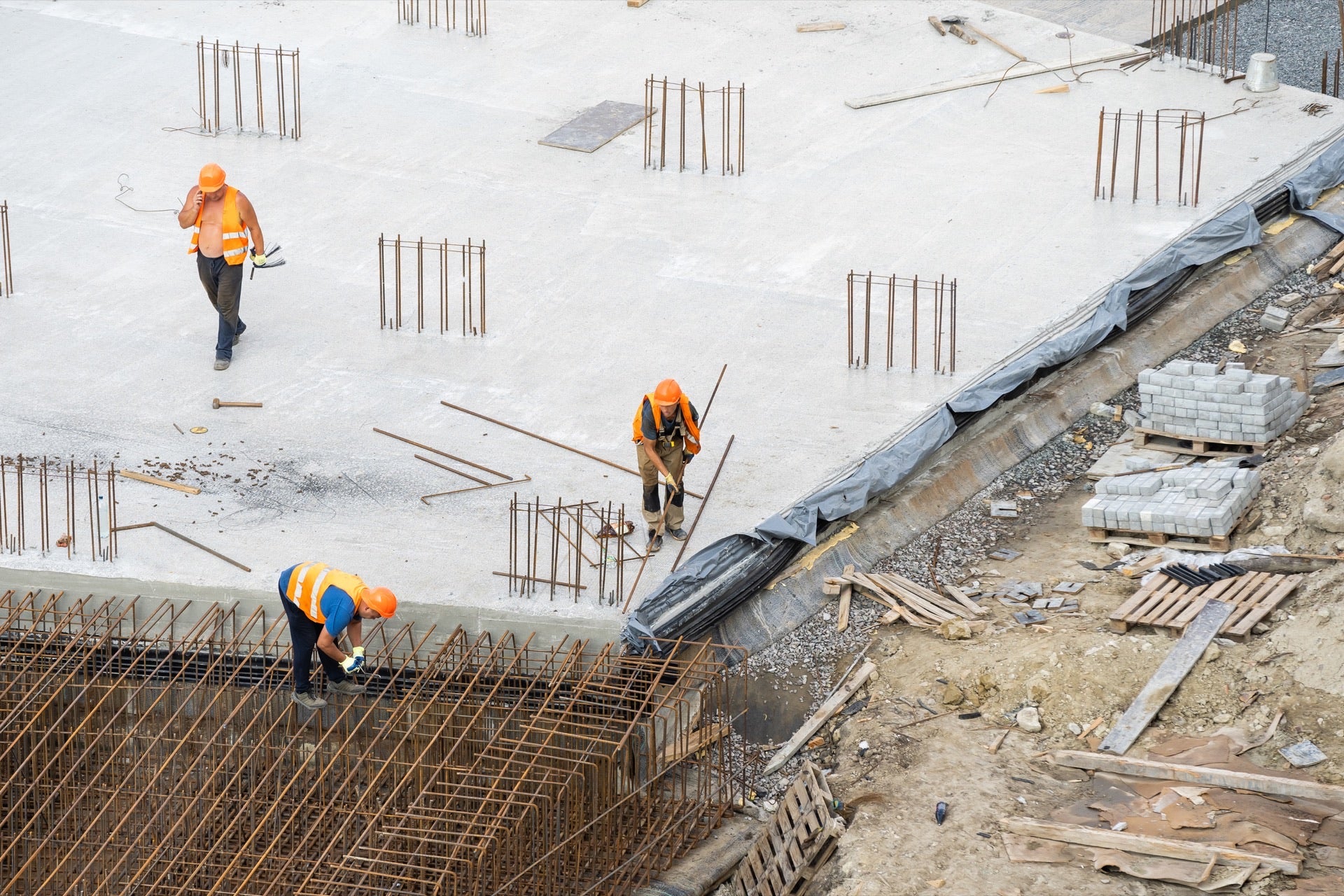
The material truck left on a Tuesday. Three state borders, an 11-hour wait at a Brahmaputra tributary crossing for the ferry to return from an upstream commercial run, and it arrived on site on Day 4. The crew of seven — who had flown into Guwahati and come overland to Tezpur — were already there. They had spent Day 3 grading the sub-base and putting in the drainage channels. When the tiles arrived, the site was ready for them. (Figures are indicative and vary by area, site condition and specification — request a free itemised estimate.)
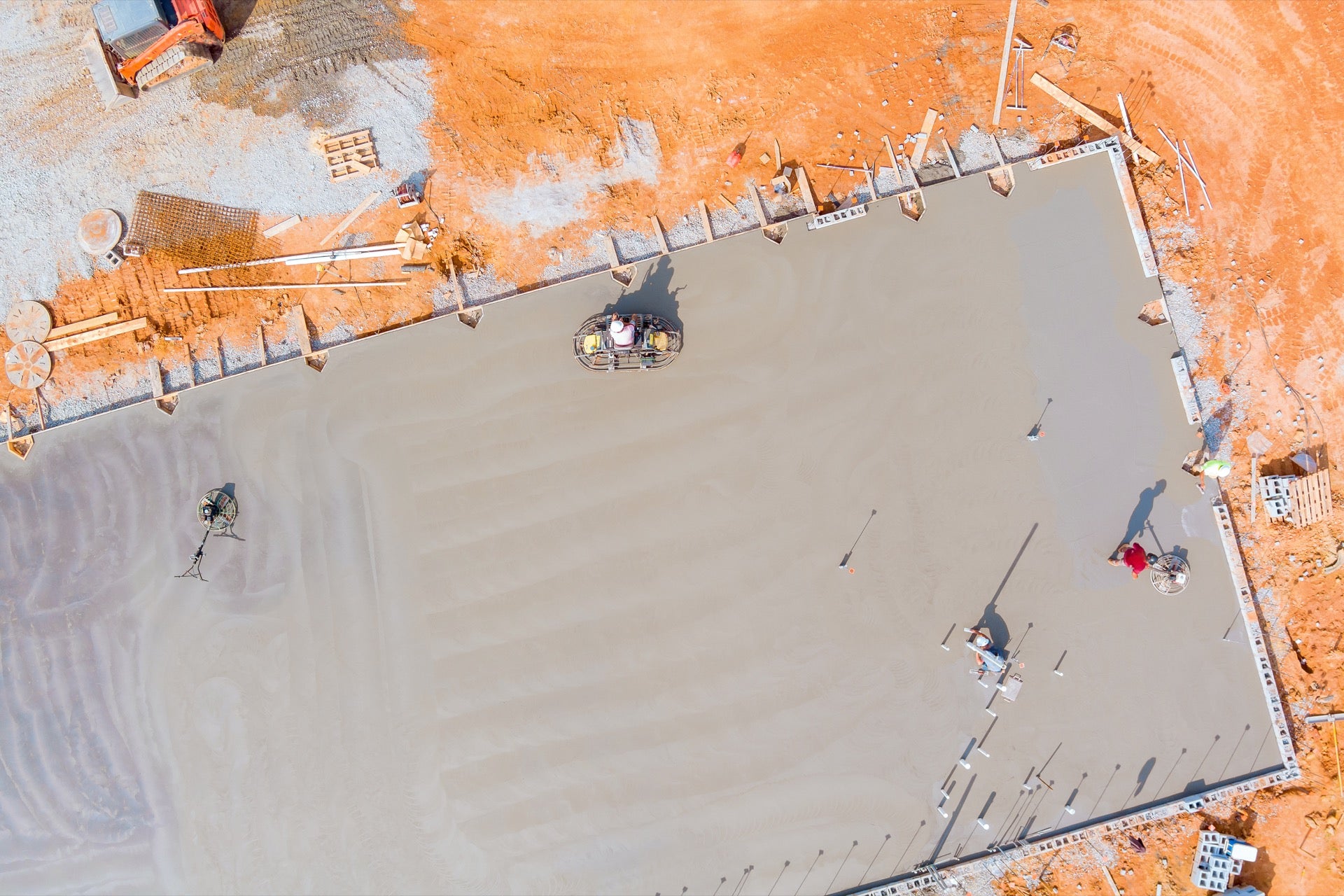
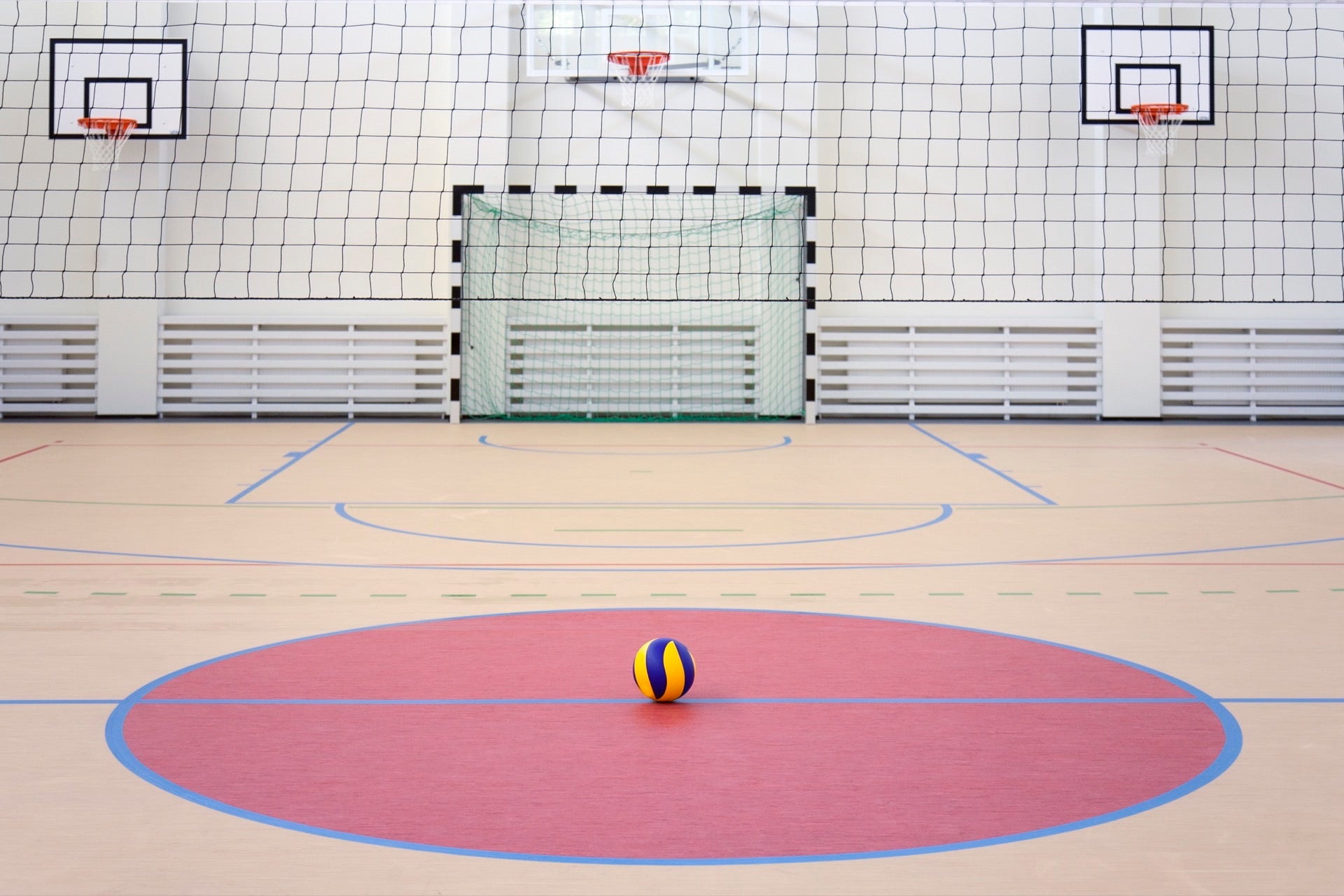
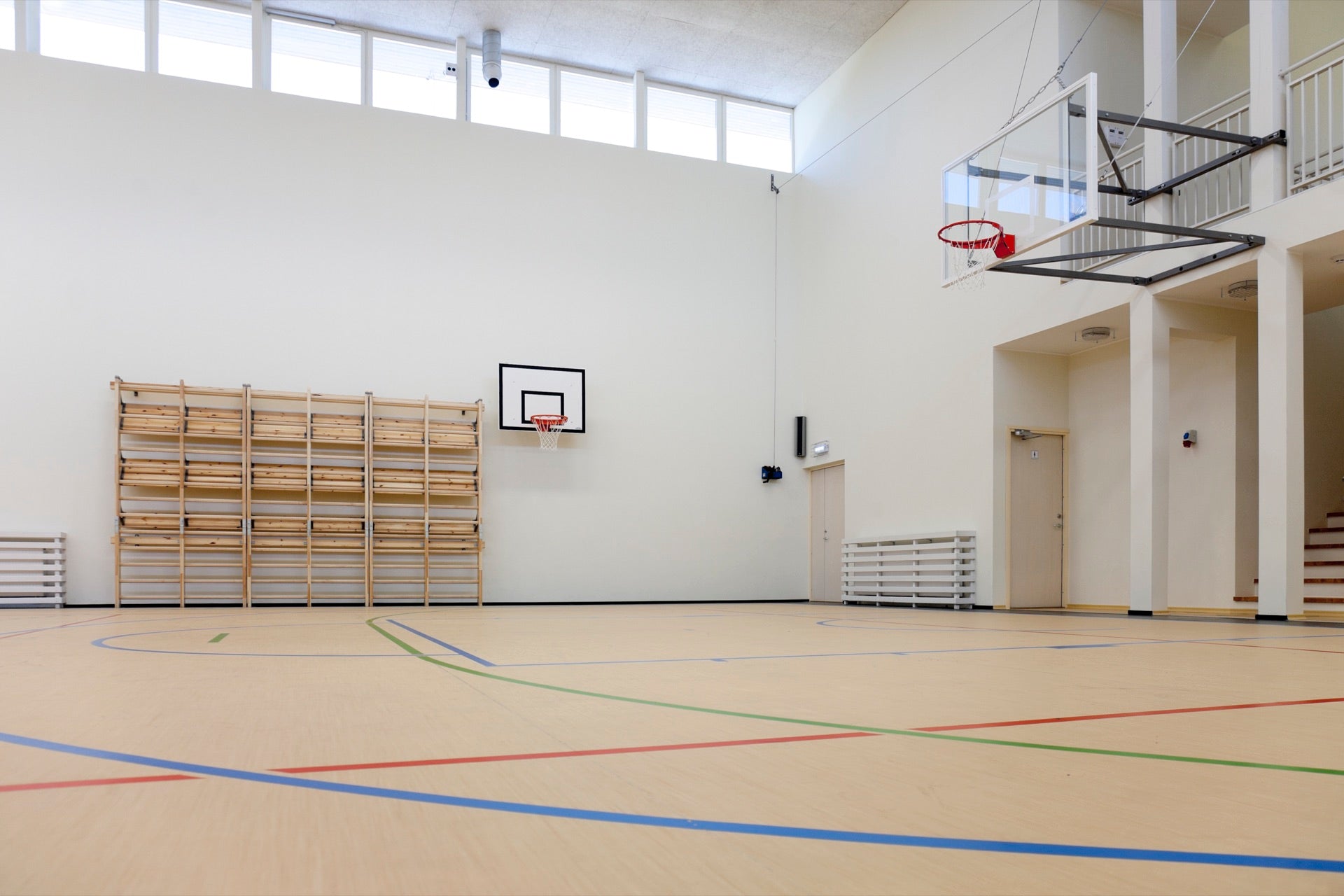
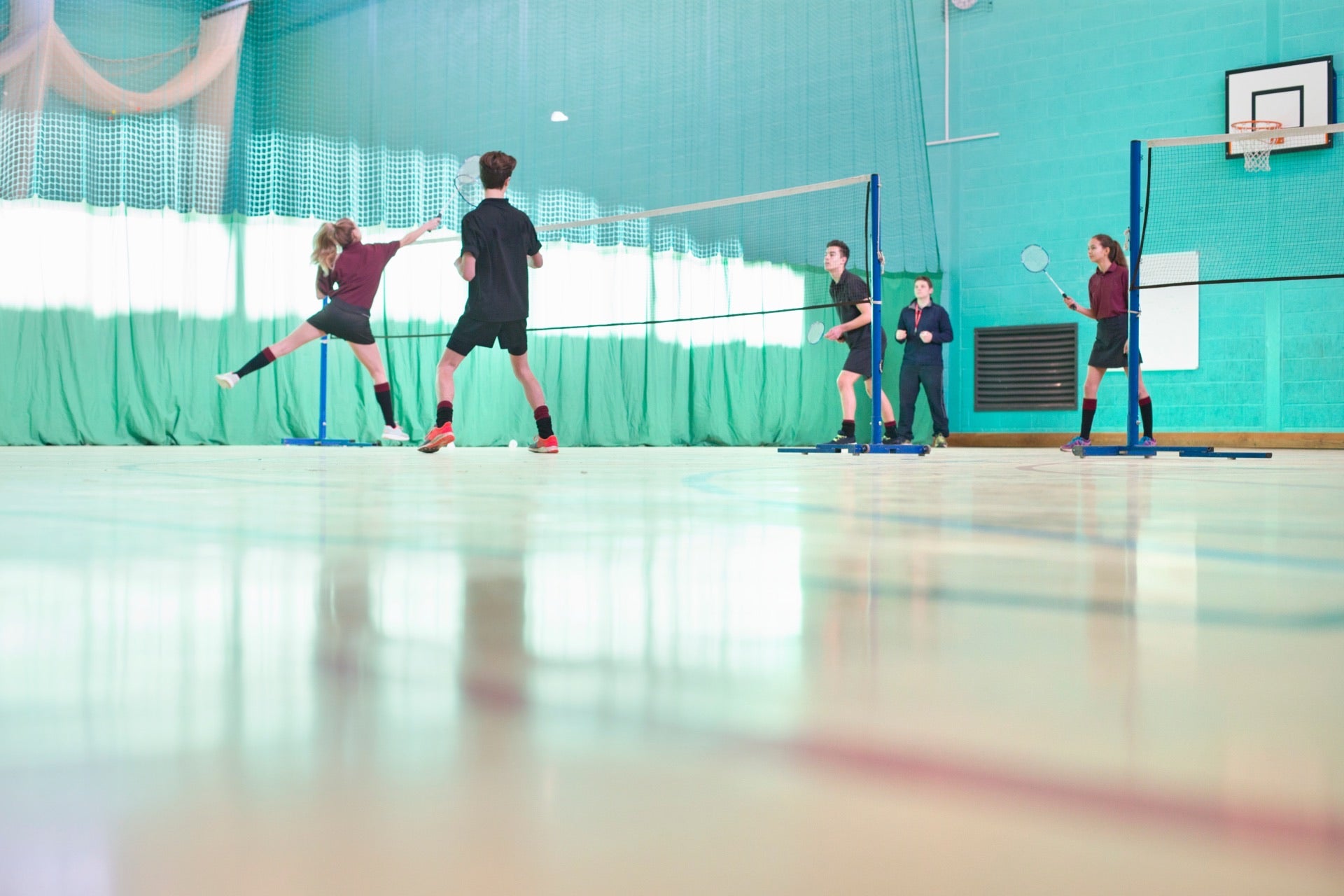
Representative imagery. Actual project photos available on request.
For thirty-nine years, the annual sports day had been held on packed earth — boundaries marked in lime powder that smudged in the first light rain. This year, students competed on Green and Blue PP tiles. When the rain arrived mid-afternoon, everyone treated it as an intermission rather than a cancellation. The courts drained. Play resumed in under half an hour.
Six weeks after installation, the school held its first inter-school tournament. Four institutions from across Sonitpur district sent teams for the basketball competition. A crowd assembled on this campus that had not been seen here for any non-academic occasion in living memory. Parents who had driven in from distant villages stood at the boundary wall watching their children play on a surface that, a month earlier, had not existed.
The PE department launched a structured coaching programme in the weeks that followed — something that had simply not been possible without a surface that could hold markings, take lateral cuts, and survive northeast India's rainfall. The three rain stoppages during construction turned out to be the best possible advertisement. If PP tiles could handle the Assam monsoon during installation itself, they would clearly handle it in service.
"I have seen contractors walk away from far less. These men stayed, worked in every window between the rains, and gave us something this school has never had. I don't have a better word for it than commitment."
Principal, A Senior Secondary School, Tezpur, Assam