
Drone footage from Day 12 of the build — the morning before handover. Students were back from summer vacation 48 hours later.
The principal's message came on a Tuesday in late May. Fourteen days. That was all the time left before 1,400 students returned from summer vacation. The school had approved the basketball court in the annual budget back in February — but site clearance, contractor negotiations, and a delayed PCC tender had eaten up four months. What was left was a cleared concrete slab and a deadline that looked impossible. (Figures are indicative and vary by area, site condition and specification — request a free itemised estimate.)
Ranchi's May heat is not something you describe — you feel it. That week, temperatures were between 40°C and 43°C by midday. Even after sunset, the ground stayed hot. A Class 12 student — one of the school's state-level basketball players who had represented Jharkhand at under-19 nationals — had been waiting for this court since Class 9. The principal knew that. She didn't say it directly during the site meeting, but everyone in that room understood — this court mattered to her top player.
The original plan had been an acrylic coating system. But with fourteen days left, that was simply not possible. A proper PCC base plus 8-layer acrylic application needs a minimum of 21 days to cure in humid conditions. The school needed something that could be installed fast, played on immediately, and still give a serious player the grip and bounce they expect.
"We had already promised the students there would be a court when they came back. Going back on that was not an option for us. The question was not whether — it was how."
The Principal, A Leading CBSE School, RanchiWe suggested PP interlocking tiles — the same snap-fit polypropylene system used in professional academies across India. Each tile is 1 ft × 1 ft. No adhesive, no curing, no specialised equipment beyond a rubber mallet and a steady eye. We inspected the existing slab and found it structurally sound. That alone saved three days.
Colour was decided on a video call the same evening. Blue for the main court, Grey for the run-off perimeter. Blue sits at the cooler end of the PP tile palette — it reduces visual heat-glare in direct sun and photographs cleanly against the school's white boundary wall. The grey run-off would anchor the court visually and take the wear from student footfall at the side gates.
Material was ordered that night. 7,200 tiles — 5,760 Blue, 1,440 Grey — plus 360 perimeter kerbs and 4 corner pieces. The truck left the dispatch point in the early hours of Thursday morning and reached the site by Friday afternoon.
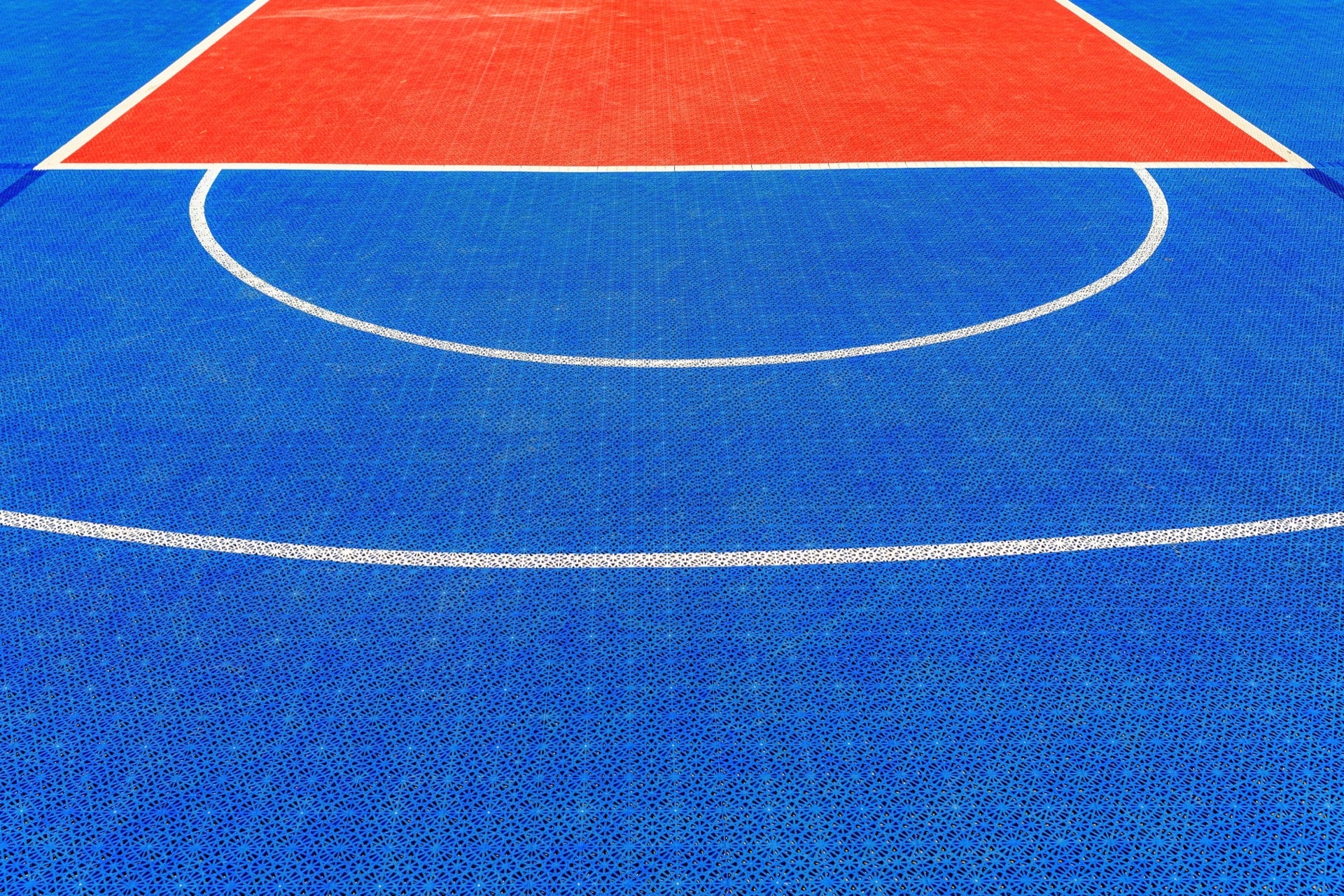
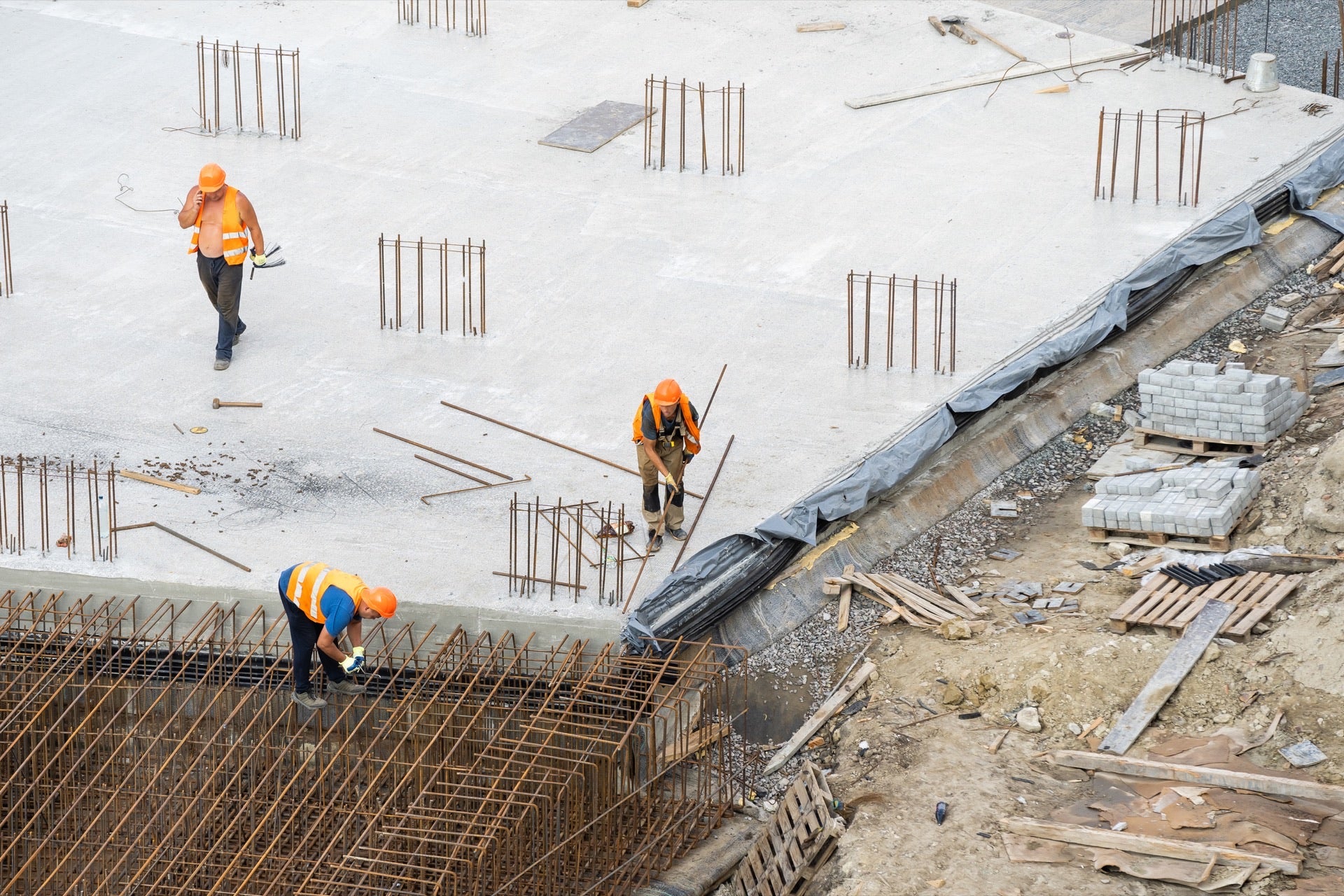
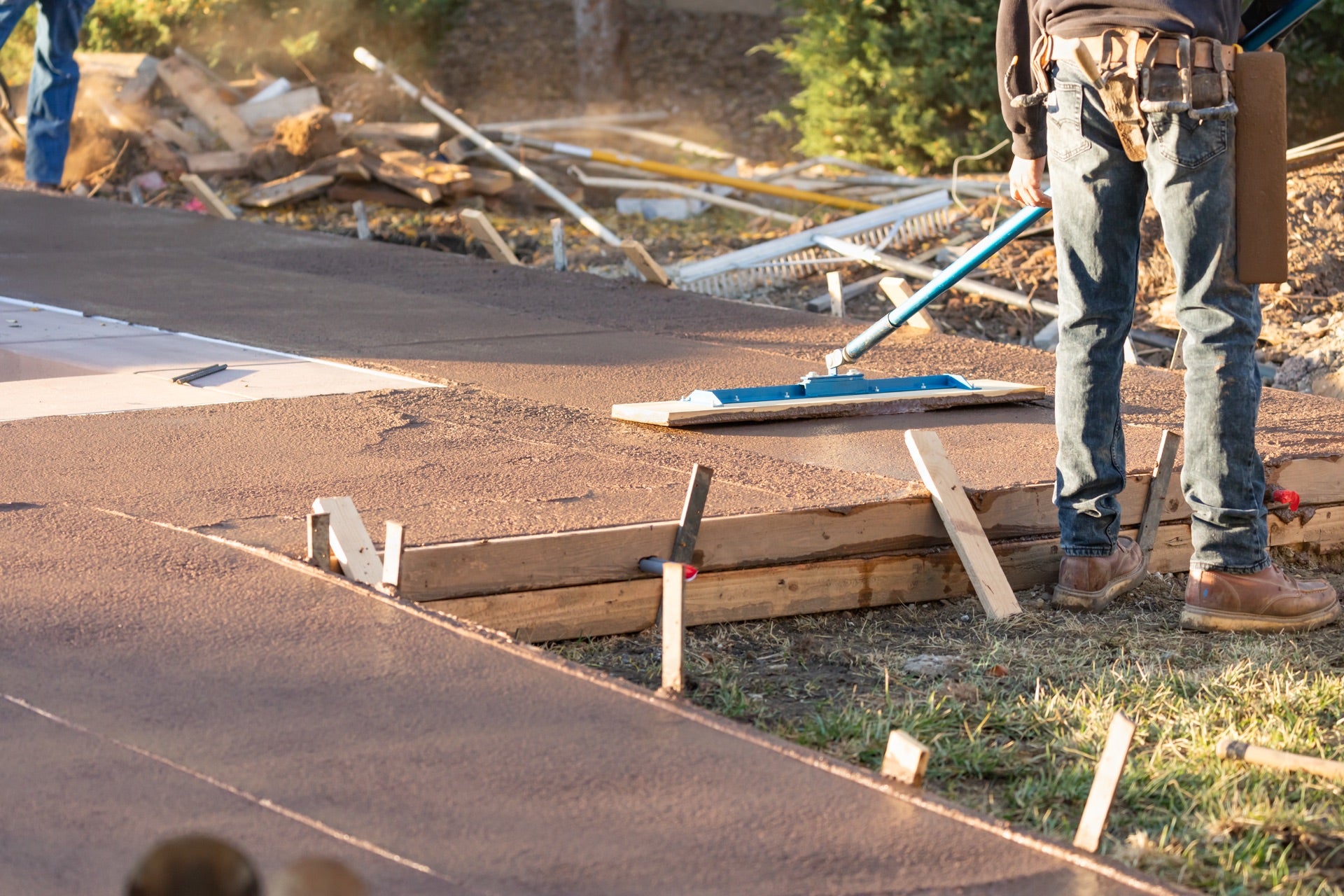
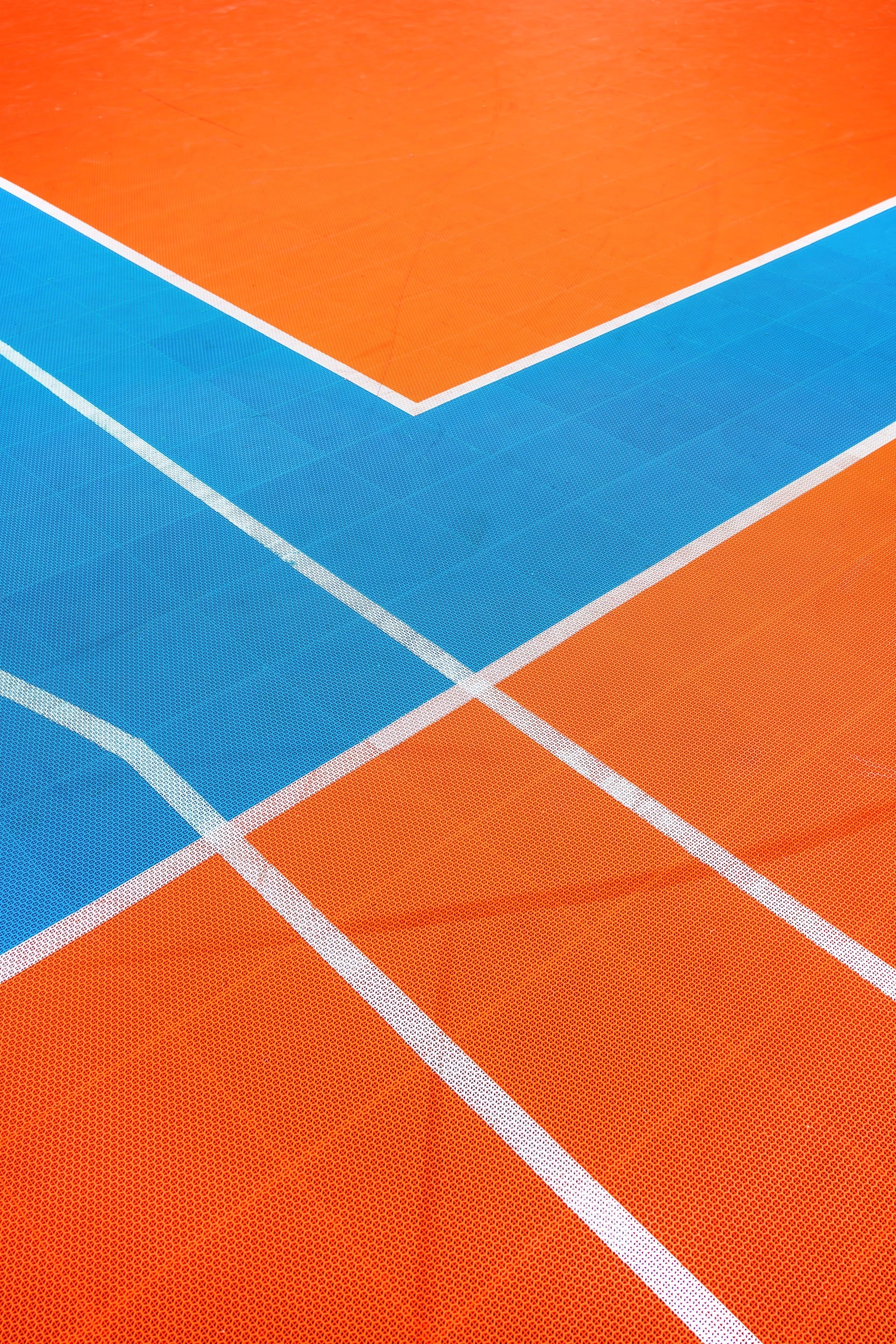
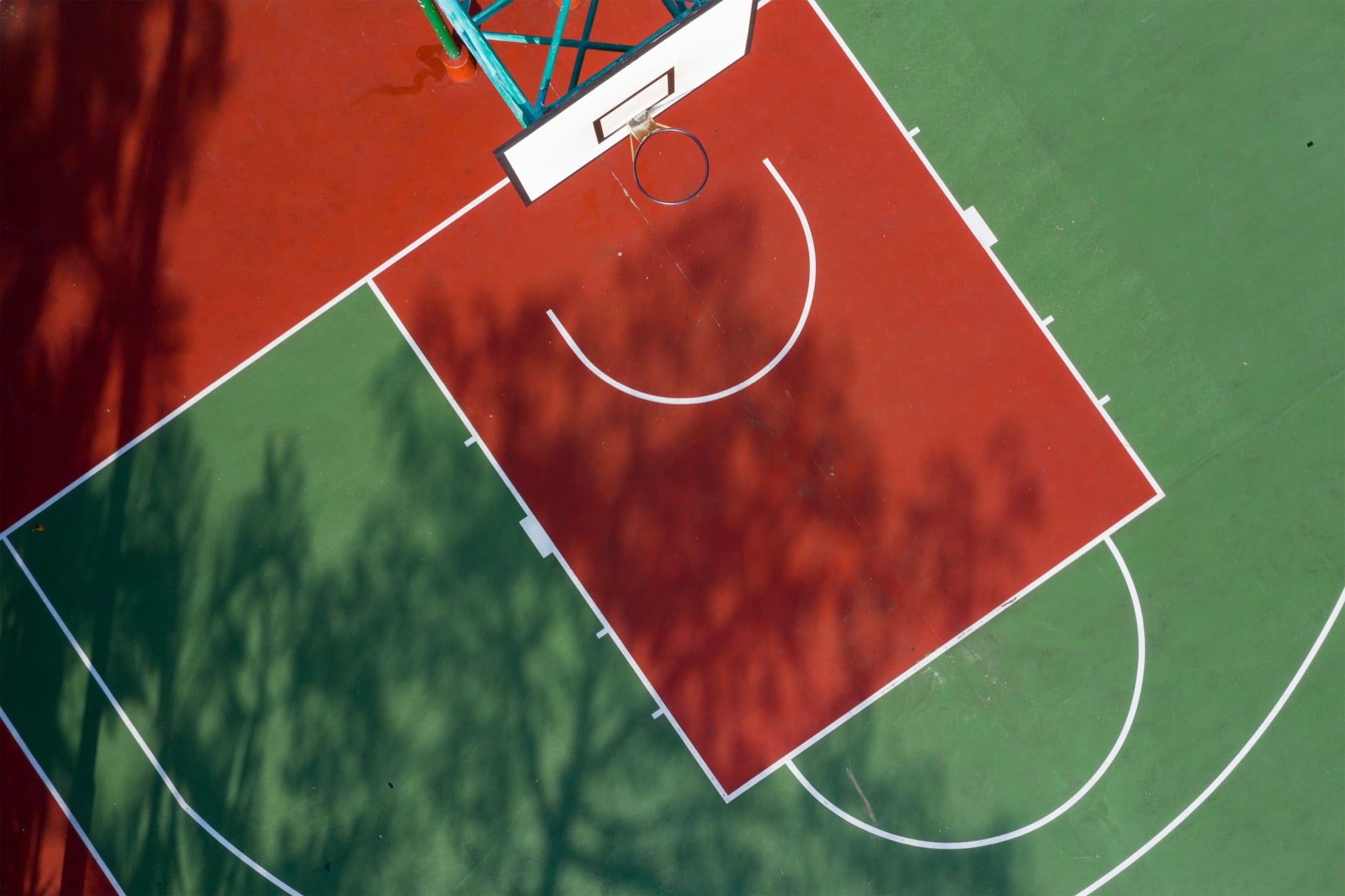
Representative imagery. Actual project photos available on request.
Students came back on a Monday. By Tuesday afternoon, the court had its first pickup game. The state-level player — now in Class 12 — reportedly came twenty minutes before school started on that first morning just to walk the surface. He had two years left at the school. He used both of them on this court.
Three months after installation, the school hosted a district-level inter-school basketball tournament for the first time in its history. Eight schools from across Jharkhand participated. The court handled three days of back-to-back games without a single tile shifting or a marking line fading. That is exactly what PP interlocking tiles are built for — consistent bounce, UV resistance, and a snap-fit joint that locks tighter under foot traffic rather than loosening.
"I have walked courts across the country. This one, built in 12 days in Ranchi's May heat — it felt like it had been there for years."
Sports Coordinator, A Leading CBSE School, RanchiProduct specifications: PP Interlocking Tiles at ₹105–115/sqft (supply). Kerbs at ₹25/piece, corners at ₹15/piece. 5-year warranty, 15+ year lifespan. Colors subject to availability; made-to-order colors have a 14-day lead time. Court dimensions are FIBA standard (7,200 sqft with run-off). All project details shared with client consent. Institution name withheld at client request.