
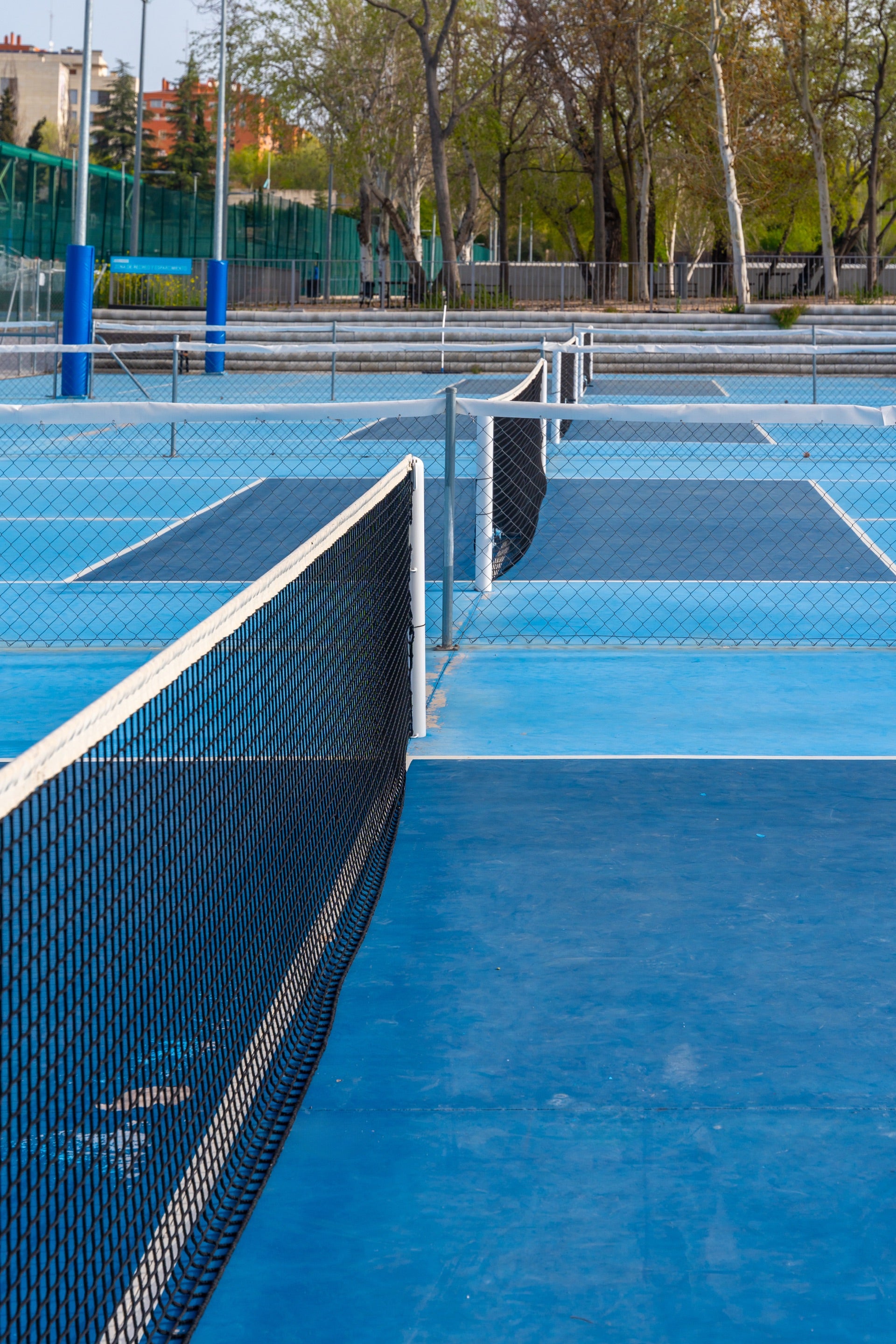
The brief arrived on a Tuesday morning with an unusual opening line: "The terrace is certified for 250 kg/sqm. We want a pickleball court." That number was not accidental. The client had already spoken to their structural engineer before calling us. They knew what the terrace could carry. What they needed to know was whether the right flooring system existed for those constraints — and whether anyone could actually get the material up there.
22nd floor penthouse terrace in South Mumbai. Service elevator capacity: 200 kg per trip. No crane access. Neighbouring units occupied — noise restrictions strictly 7am to 7pm. A 1,800 sqft pickleball court to be done in 8 days. On paper, it looked like a puzzle. In practice, it became one of the most carefully planned projects we have executed.
The Challenge
The structural load constraint was the single most important factor in every decision after that. M20-grade PCC with a GSB sub-base — the standard base for an outdoor acrylic court — weighs roughly 225 kg per sqm at 90mm thickness. Across 1,800 sqft, that is about 37,600 kg of dead load added to the terrace. The terrace was certified for 250 kg/sqm. A PCC base alone would have used up most of that margin before the surface system was even applied.
PP interlocking tiles, on the other hand, weigh about 2.8 kg per sqm. No adhesive, no wet pour, no curing time. The tile system sits directly on the existing terrace membrane, with the snap-fit design distributing load evenly across the full surface. The structural engineer reviewed our product load specification and confirmed it comfortably within the certified capacity — with significant margin to spare.
When ChampCourts told us the PP tile system would add less than 3 kg per sqm to the terrace dead load, I ran the numbers twice. It gave us headroom we honestly did not expect to have. That unlocked the whole project.
The elevator constraint shaped everything else. The building management was clear — 200 kg per trip, no exceptions. Overloading the service lift in a residential tower is not something any building manager will allow. Each standard pallet from our warehouse weighs 280–320 kg. Repacking into sub-200 kg loads was not optional. It added a full day of repacking before the material even left our facility.
Noise was the third constraint. Neighbouring units and the floors below were occupied. Any construction noise after 7pm would generate complaints and potentially building management intervention. The team was briefed: all tile snapping, any drilling for net posts, all mechanical work — done before 7pm, every single day. Tools down, tarps laid, site secured. No exceptions.
The Solution
We repacked the tile consignment into 47 sub-loads at 180–195 kg each — below the 200 kg lift limit, with buffer for the trolley weight and a team member. We prepared a load manifest so the building manager could see exactly how many trips would be needed and on which days. That level of transparency helped the building office plan elevator access slots during morning off-peak hours when resident usage was low.
On-site, the team worked in a strict sequence.
Day 1 was entirely logistics — all 47 trips, sub-loads sorted into zones on the terrace using the same zone-labelling approach we use for remote supply projects. Days 2 through 6 were tile installation: Green for the main court field, Yellow for the in-bounds zone markings. Days 7 and 8 covered net post installation, line tape, and perimeter edge finishing.
The result: all drilling was concentrated into one morning session, not spread over multiple days. Neighbours reported it as "a morning of drilling." Not a week of construction.
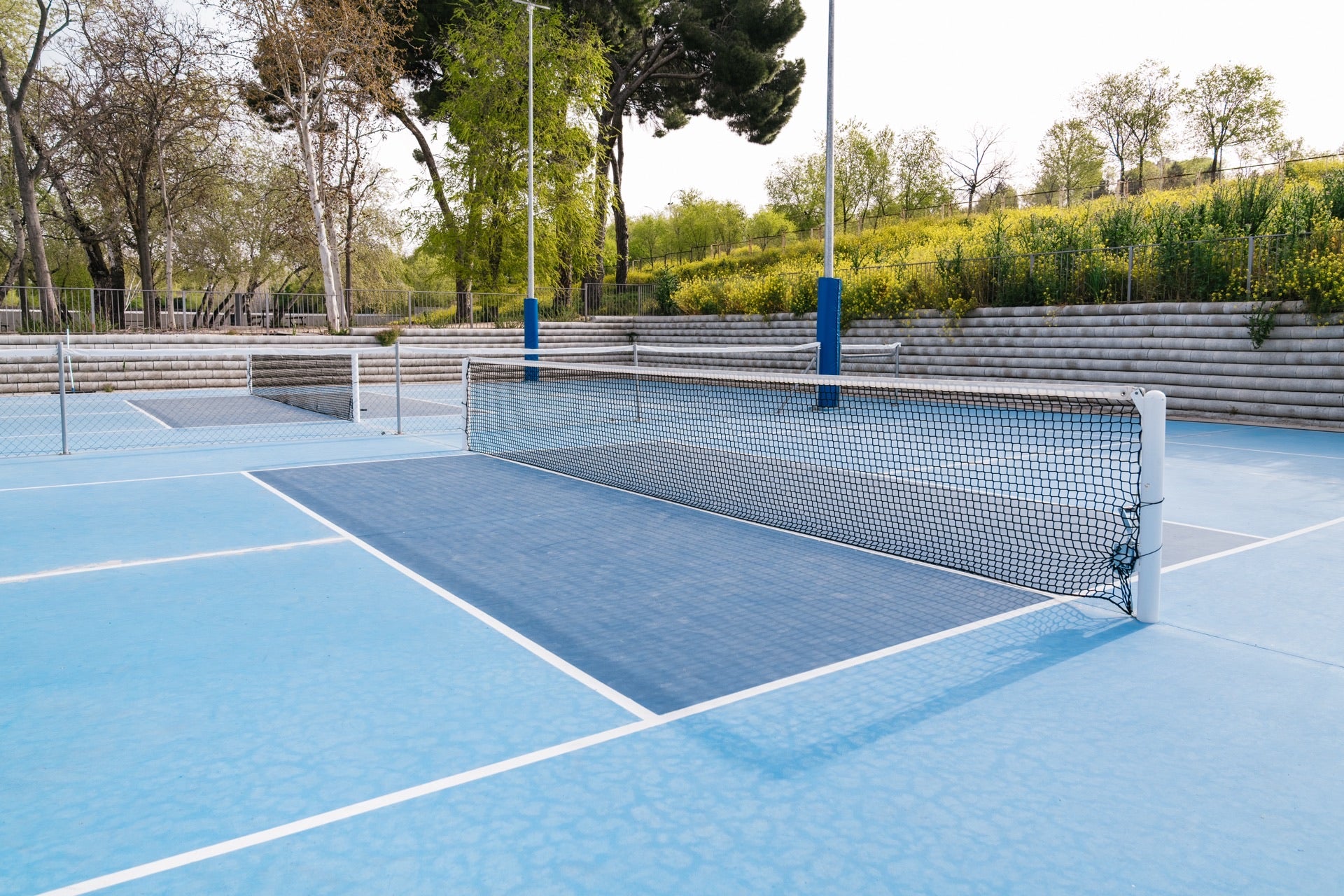
Tile colours — rooftop optimised for visibility and aesthetics:
The Build (Figures are indicative and vary by area, site condition and specification — request a free itemised estimate.)
The Result
The court was ready in 8 days. The client played the first game on the evening of Day 8, while our crew was still packing their tools. What happened in the months that followed — that part surprised everyone, including the client.
Society members from neighbouring towers started showing up for evening sessions. The client started hosting informal Saturday morning games that grew to twelve regular players from four different buildings. "Rooftop pickleball" became a talking point in the building's WhatsApp groups, then in the whole neighbourhood. Three enquiries came in from other building societies asking us for a similar setup. One of those became a project. Two are still in discussion.
I thought this would be my private space. I had no idea it would turn social. Within two months I had to put a sign-up sheet on the terrace door. In the best possible way, it got completely out of hand.
All project photographs shown are representative illustrations. The client's identity and building details have been withheld on their request. Structural load data cited reflects the engineer's report shared during project scoping. Social outcomes described are based on information shared by the client over subsequent months.